
Heavy-duty rollers with bearings are critical mechanical components used in modern industrial systems. They are widely applied in conveyor equipment, mining machinery, automated production lines, steel manufacturing, logistics systems, port handling equipment, and heavy-load transportation platforms.
From an engineering perspective, these components play a fundamental role in reducing friction, improving load transfer efficiency, minimizing mechanical wear, and enhancing operational stability under extreme working conditions.
This article explores the structure, working principles, material selection, bearing technology, and industrial applications of heavy-duty rollers with bearings from an academic and scientific perspective.
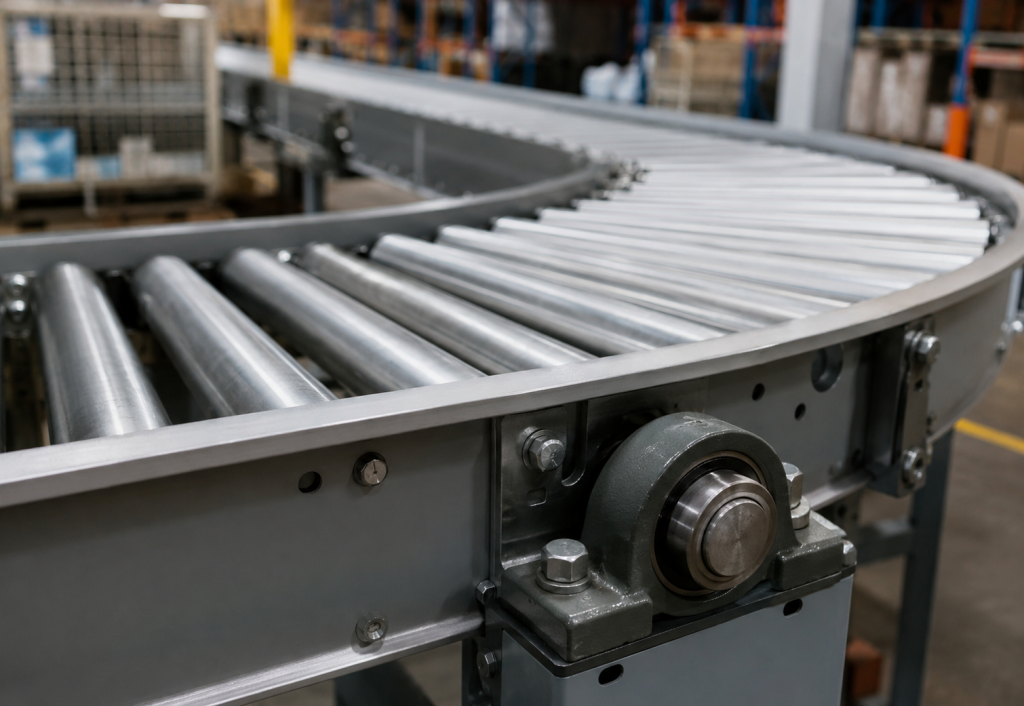
What Are Heavy Duty Rollers with Bearings?
A heavy-duty roller is a cylindrical mechanical component designed to support and transport heavy loads while rotating around a fixed axis. Bearings are integrated into the roller structure to reduce rotational friction and support radial and axial forces.
The basic structure typically includes:
- Roller shell
- Shaft or axle
- Bearing assembly
- Sealing system
- Lubrication mechanism
- End caps or housings
The combination of rollers and bearings enables smooth motion with minimal energy loss, even under continuous high-load operation.
Working Principle of Roller Bearing Systems
The primary purpose of bearings inside rollers is to replace sliding friction with rolling friction.
Without bearings:
- Metal surfaces slide directly against each other
- Friction coefficient increases
- Heat generation rises rapidly
- Wear accelerates
With bearings:
- Rolling elements rotate between raceways
- Contact resistance decreases significantly
- Mechanical efficiency improves
- Equipment lifespan increases
The friction relationship can be expressed conceptually as:
F=μN
Where:
- F = friction force
- μ = coefficient of friction
- N = normal load
Rolling systems dramatically reduce the effective friction coefficient compared with sliding systems.
Types of Bearings Used in Heavy Duty Rollers
Different industrial applications require different bearing technologies.
Deep Groove Ball Bearings
These are among the most common bearing types used in conveyor rollers.
Characteristics:
- High rotational speed
- Low friction
- Moderate load capacity
- Simple structure
Applications:
- Warehouse conveyors
- Packaging systems
- Light industrial transport
Tapered Roller Bearings
Tapered roller bearings are designed for combined radial and axial loads.
Advantages:
- Excellent heavy-load capability
- High structural rigidity
- Better shock resistance
Applications:
- Mining conveyors
- Steel mills
- Heavy industrial transport systems
Spherical Roller Bearings
Spherical roller bearings can compensate for shaft misalignment.
Advantages:
- Self-aligning capability
- Excellent durability
- High load-bearing performance
Applications:
- Cement plants
- Bulk material handling
- Harsh industrial environments
Material Science in Heavy Duty Rollers
Material selection directly influences roller performance, wear resistance, and service life.
Carbon Steel Rollers
Carbon steel is widely used because of:
- High strength
- Good machinability
- Cost efficiency
However, corrosion protection may be necessary in humid environments.
Stainless Steel Rollers
Stainless steel rollers offer:
- Corrosion resistance
- Hygienic performance
- Chemical stability
They are commonly used in:
- Food processing
- Pharmaceutical production
- Marine environments
Polyurethane-Coated Rollers
Polyurethane coatings provide:
- Noise reduction
- Surface protection
- Improved grip
- Shock absorption
These are often used in automated logistics systems.
Load Capacity and Mechanical Stress
Heavy-duty rollers are designed to withstand substantial mechanical forces.
The load distribution on roller systems depends on:
- Roller diameter
- Bearing size
- Material hardness
- Shaft rigidity
- Dynamic loading conditions
The contact stress between surfaces can be analyzed using Hertzian contact theory, which is widely applied in tribology and mechanical engineering.
Excessive stress may cause:
- Surface fatigue
- Bearing spalling
- Plastic deformation
- Premature failure
Therefore, proper engineering calculations are essential during equipment design.
Lubrication Technology
Lubrication is critical for bearing longevity.
The main functions of lubrication include:
- Reducing friction
- Dissipating heat
- Preventing corrosion
- Minimizing wear
- Reducing vibration
Common lubrication methods include:
- Grease lubrication
- Oil bath systems
- Automatic centralized lubrication
In high-temperature environments, synthetic lubricants are often preferred due to their superior thermal stability.
Sealing Systems and Environmental Protection
Industrial rollers frequently operate in:
- Dusty mines
- Wet environments
- High-temperature factories
- Chemically aggressive conditions
Sealing systems prevent contaminants from entering bearing assemblies.
Common seal types include:
- Contact seals
- Labyrinth seals
- Rubber seals
- Metal shields
Advanced sealing technology significantly improves equipment reliability and reduces maintenance costs.
Industrial Applications
Conveyor Systems
Heavy-duty rollers are essential components in:
- Belt conveyors
- Gravity conveyors
- Roller conveyors
Industries include:
- Logistics
- Warehousing
- Mining
- Airports
- Manufacturing
Mining and Bulk Material Handling
Mining environments require rollers capable of handling:
- Abrasive materials
- Shock loads
- Continuous operation
These systems prioritize:
- Wear resistance
- Bearing durability
- Dust protection
Steel and Metallurgical Industries
Steel mills operate under:
- High temperatures
- Heavy loads
- Severe vibration
Special heat-resistant rollers and bearings are often required.
Automated Manufacturing
Modern smart factories rely on precision rollers for:
- Robotic transport
- Assembly lines
- Automated sorting systems
Precision bearings improve:
- Motion accuracy
- Energy efficiency
- System reliability
Failure Mechanisms in Heavy Duty Rollers
Despite robust engineering, rollers may fail due to:
Bearing Fatigue
Repeated cyclic stress eventually causes microscopic cracks in bearing surfaces.
Lubrication Failure
Insufficient lubrication increases:
- Friction
- Heat
- Surface damage
Corrosion
Moisture and chemicals may degrade metal surfaces and weaken structural integrity.
Misalignment
Improper installation can generate uneven load distribution and premature wear.
Emerging Technologies and Industry Trends
Modern roller systems increasingly integrate advanced technologies.
Smart Bearings
Sensors can monitor:
- Temperature
- Vibration
- Rotational speed
- Lubrication condition
This supports predictive maintenance strategies.
Advanced Materials
New materials include:
- Ceramic hybrid bearings
- Composite roller shells
- Nano-coatings
These improve:
- Wear resistance
- Corrosion resistance
- Energy efficiency
Industry 4.0 Integration
Heavy-duty conveyor systems are increasingly connected to:
- IoT platforms
- AI diagnostics
- Automated monitoring systems
This reduces downtime and improves operational efficiency.
Conclusion
Heavy-duty rollers with bearings are indispensable components in modern industrial engineering. Their performance depends on a combination of mechanical design, material science, bearing technology, lubrication engineering, and environmental protection systems.
As industries continue moving toward automation, energy efficiency, and intelligent manufacturing, roller and bearing technologies will become even more advanced. Future developments are expected to focus on predictive maintenance,