
In industrial machinery, bearings rarely operate under a single type of force. Instead, they are exposed to a combination of axial loads and radial loads, often simultaneously. Understanding the difference between these two load types is essential for correct bearing selection, reliable machine design, and long service life.
Misjudging load direction is one of the most common reasons for premature bearing failure in heavy machinery.
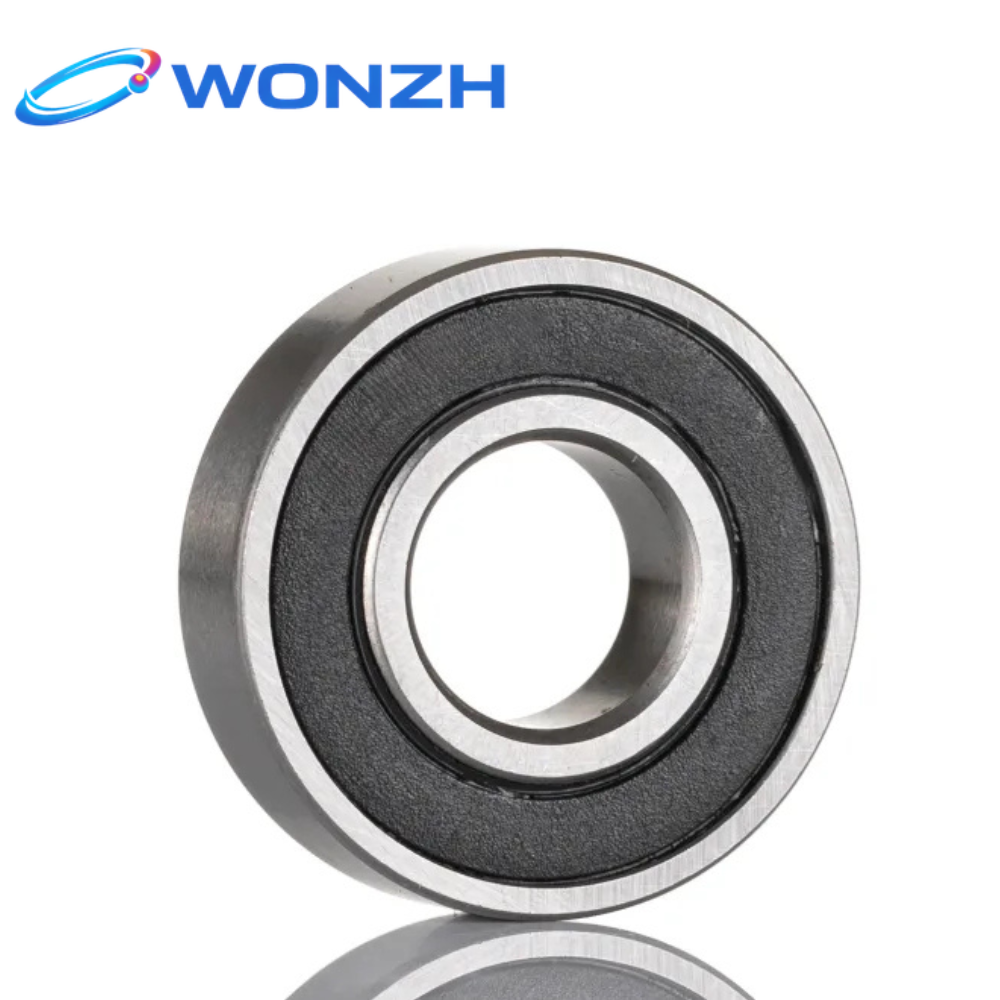
What Is Radial Load?
A radial load is a force that acts perpendicular to the shaft axis.
In simple terms, it pushes or presses the shaft sideways.
Fr⊥shaft axis
Typical sources of radial load:
- Conveyor belt tension
- Gear meshing forces
- Pulley-driven systems
- Crusher and grinding forces
- Rotating drum weight
Characteristics of radial load:
- Acts at 90° to shaft direction
- Most common load in rotating machinery
- Dominates in conveyors, motors, and rollers
- Primarily supported by roller and deep groove bearings
Bearings designed for radial load:
- Cylindrical roller bearings
- Deep groove ball bearings
- Spherical roller bearings (combined capability)
What Is Axial Load?
An axial load (also called thrust load) acts parallel to the shaft axis.
It pushes the shaft in the same direction as its rotation axis.
Fa∥shaft axis
Typical sources of axial load:
- Helical gear systems
- Pump impellers
- Screw conveyors
- Thrust from rotating blades
- Misalignment-induced force components
Characteristics of axial load:
- Acts along the shaft axis
- Can be single-direction or bidirectional
- Often smaller in magnitude but highly critical
- Strongly influences bearing selection in precision systems
Bearings designed for axial load:
- Thrust ball bearings
- Tapered roller bearings
- Angular contact ball bearings
- Axial spherical roller bearings
Combined Loads in Real Machinery
In real industrial applications, bearings rarely experience only radial or only axial load. Most systems involve combined loading conditions.
P=XFr+YFa
Where:
- Fr = radial load
- Fa = axial load
- P = equivalent dynamic load
- X,Y = load factors depending on bearing type
Example systems with combined loads:
- Mining crushers
- Conveyor gearboxes
- Automotive wheel hubs
- Industrial pumps
- Wind turbine gear systems
Key Differences Between Axial and Radial Loads
| Feature | Radial Load | Axial Load |
|---|---|---|
| Direction | Perpendicular to shaft | Parallel to shaft |
| Main stress type | Bending / side force | Push / thrust force |
| Common in | Motors, conveyors | Pumps, screws, gear systems |
| Bearing focus | Load distribution | Thrust capacity |
| Risk if mismanaged | Wear and misalignment | End play failure |
Why Load Direction Matters in Bearing Selection
Selecting the wrong bearing for the load type can lead to:
- Premature fatigue failure
- Excessive heat generation
- Shaft misalignment
- Lubrication breakdown
- Severe vibration and noise
For example:
- Using a standard deep groove ball bearing in a high axial load system will significantly reduce lifespan.
- Using a thrust bearing in a high radial load conveyor will cause rapid failure.
How Bearings Handle Different Loads
Different bearing types are engineered for specific load conditions:
1. Radial Load Dominant Systems
Best suited bearings:
- Cylindrical roller bearings
- Spherical roller bearings
- Deep groove ball bearings
2. Axial Load Dominant Systems
Best suited bearings:
- Thrust ball bearings
- Tapered roller bearings
- Axial spherical roller bearings
3. Combined Load Systems
Best suited bearings:
- Tapered roller bearings
- Angular contact ball bearings
- Spherical roller bearings
Role of Spherical Roller Bearings
Spherical roller bearings are widely used in heavy machinery because they can handle:
- High radial loads
- Moderate axial loads
- Misalignment conditions
- Shock and vibration
This makes them ideal for mining, construction, and bulk material handling equipment.
Practical Engineering Insight
In real-world design, engineers rarely calculate loads in isolation. Instead, they consider:
- Dynamic load variation
- Shock loading factors
- Misalignment effects
- Speed and temperature conditions
- Lubrication film stability
A correct understanding of axial vs radial load helps ensure:
- Longer bearing life
- Lower maintenance cost
- Higher machine reliability
Conclusion
Axial and radial loads define how force is applied to a bearing, and both must be carefully evaluated during design and selection.
- Radial loads act perpendicular to the shaft and dominate most rotating systems.
- Axial loads act along the shaft axis and are critical in thrust-heavy applications.
- Most industrial machines involve a combination of both, requiring careful bearing selection.
Understanding these load types is fundamental to improving equipment reliability in heavy machinery, mining, and industrial engineering applications.